

By Robin Cowie Nalepa
Associate Director, Communications
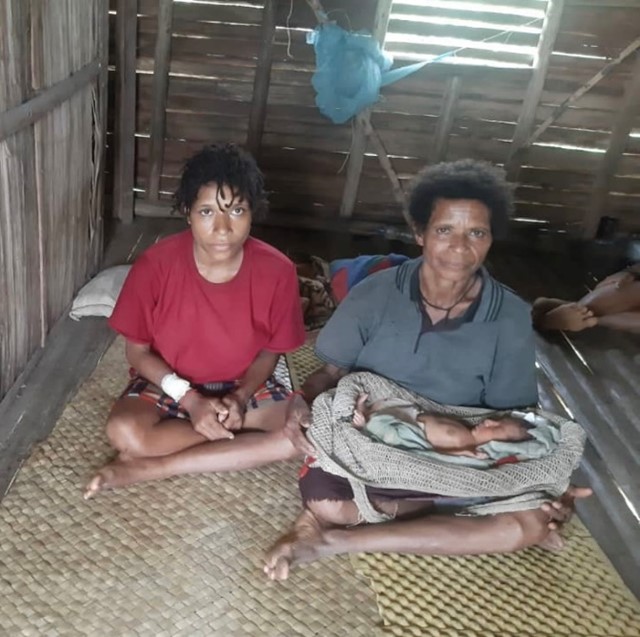 Regina (l) and her mother with Regina’s infant daughter after receiving postnatal care in Papua New Guinea. The use of a clean birthing kit during Regina’s delivery reduced the risk of infection for Regina and her newborn. (photo courtesy of Papua New Guinea (PNG) Sustainable Development Program (SDP))
Traditionally, bark, leaves, or an old rug may serve as a birthing bed, bush vines tie the umbilical cord, and a piece of bamboo or rusty tool act as a scalpel, Florence said.
“That can introduce infection, and the baby can die from infections through the cord,” she said.
Experts estimate more than 60 percent of women in PNG give birth in villages, frequently in isolated locations, without trained birthing attendants. In PNG and other developing countries, maternal mortality rates are high, with an estimated 430 deaths per 100,000 births in 2020, according to the World Health Organization (WHO), which also reports most of these deaths could be prevented.
However, research shows clean birthing kits improve infection rates and reduce maternal and neonatal mortality, according to the WHO.
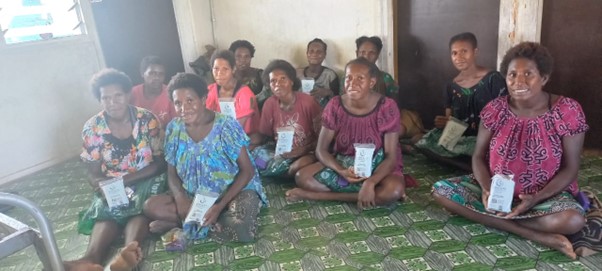 Pregnant women receive birthing kits after an antenatal clinic in Papua New Guinea. The Birthing Kit Foundation Australia supplied birthing kits that help decrease maternal and infant mortality rates in remote areas of developing countries. (Courtesy PNG SDP)
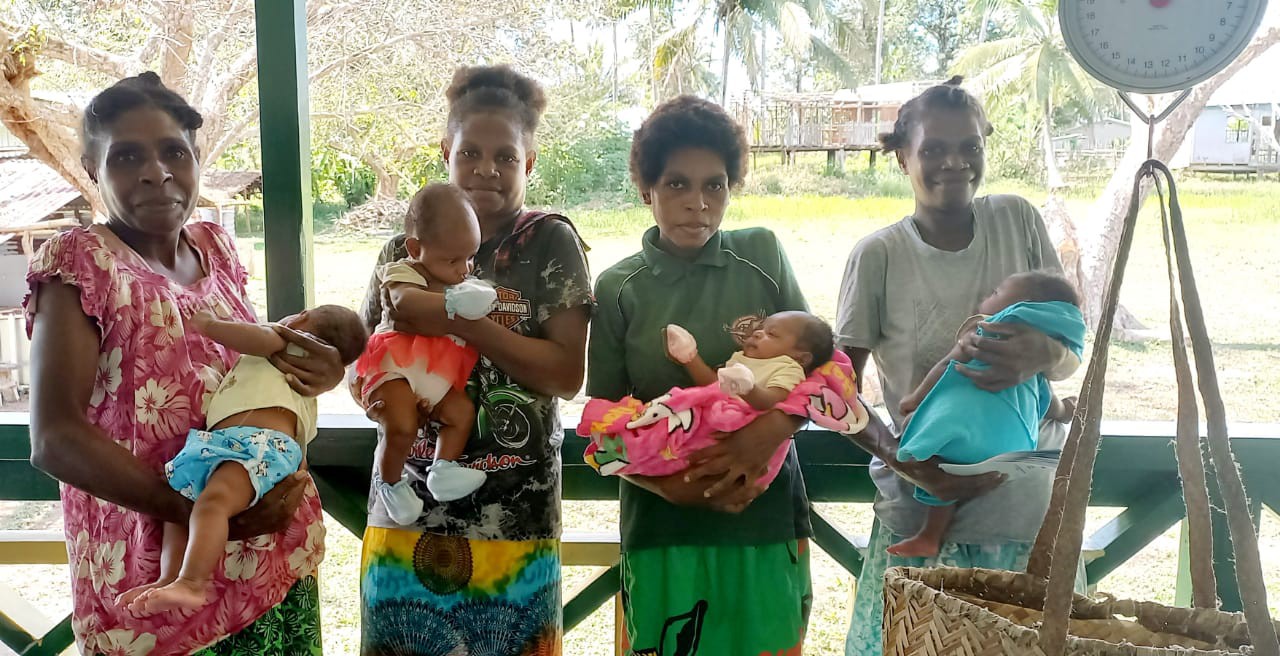 Mothers hold their babies at a well-baby check in Papua New Guinea. Clean birthing kits supplied by the Birthing Kit Foundation Australia through its field partners, including PNG SDP, improve maternal and newborn mortality rates in developing countries and contribute to healthier outcomes for communities. (photo courtesy of PNG SDP)
Improving Outcomes for Mothers and Babies
BKFA supplied over 128,000 birthing kits to remote areas in 11 developing countries in the Pacific and sub-Saharan Africa in 2023-2024.
Pregnant women often receive the free kits at antenatal clinics, where health workers provide care, education and instructions on their use. Recipients are encouraged to keep the kits safe until delivery, ideally at a clinic with trained personnel. Unfortunately, this isn’t always possible, Florence said.
“Sometimes mothers can walk for days before they come to the next health facility,” Florence said. “They might not find the health worker there, and then the facility itself is not up to the standard where it can care for the delivery.”
The BKFA’s efforts have a ripple effect, according to Adrian Harris, the organization’s business and operations manager.
If a mother and her child remain healthy by using a birthing kit, the family can focus on immediate and longer-range needs, rather than the stress of medical complications, he said. The kits also help build trust and increase the likelihood that mothers will seek postnatal follow-up care, infant vaccinations and birth control. Women and attendants share their positive experiences with others in their circles. Communities become stronger and more resilient, Adrian said.
More than 800 languages are spoken in PNG, so words of thanks are not always understood, but smiles and nods often begin an important validation process.
“We always notice the black plastic or the green plastic sheets that they use during delivery,” said Florence. “Mothers wash it well, and they continue to use it making beds in their babies’ baskets [with the plastic sheets].”
Commitment to Delivering Healthier Communities
Thermo Fisher got involved with the BKFA in 2023 when colleagues in Australia and New Zealand were looking for volunteer opportunities that could be eligible for Community Impact Grants, which are awarded to the company’s Community Action Councils (CACs) whose volunteer efforts are an extension of Thermo Fisher’s corporate social responsibility efforts. This includes enabling health equity worldwide through partnerships with customers, governments and nonprofits that are focused on removing barriers to accessibility, so everyone has a fair and just opportunity to attain their highest level of health.
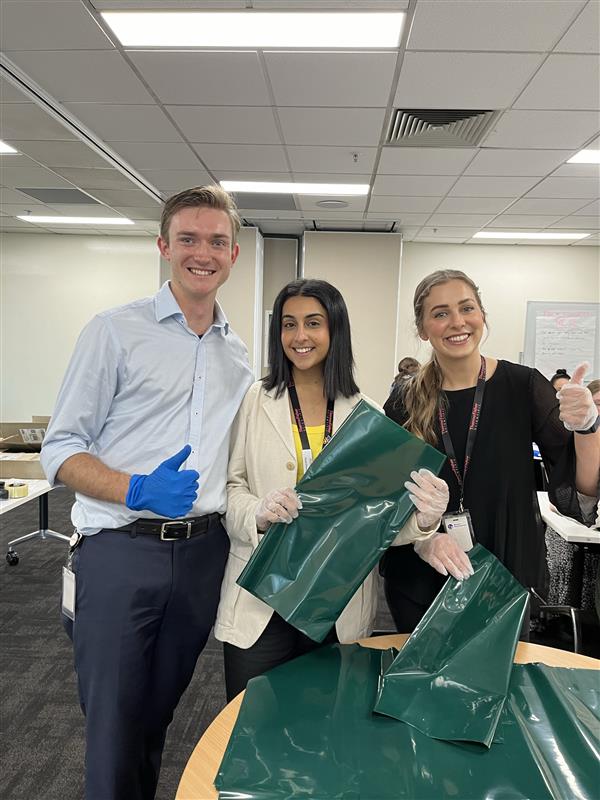 Thermo Fisher Scientific colleagues in Scoresby, Victoria, Australia, (l to r) James Verheggen, Kanal Chavda and Holly Prescott assemble clean birthing kits during a packing day for the Birthing Kit Foundation Australia. The non-profit humanitarian organization distributes the kits for use by pregnant women, midwives, clinics and traditional birthing attendants in under-resourced areas of countries in sub-Saharan Africa and the Pacific.
In total, colleagues globally have volunteered more than 500 hours and assembled 4,000 clean birthing kits to date.
"It is incredibly rewarding and humbling to work for a company that takes its commitment to corporate social responsibility so seriously," Holly said.
In PNG, Regina expressed thanks to everyone who helped her deliver her healthy baby girl.
“I am very grateful for the birthing kit and the SDP health team as well,” Regina said.